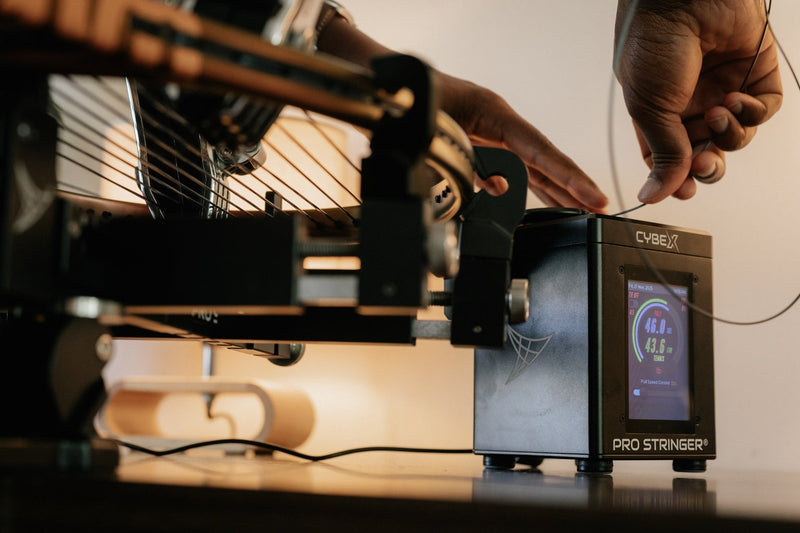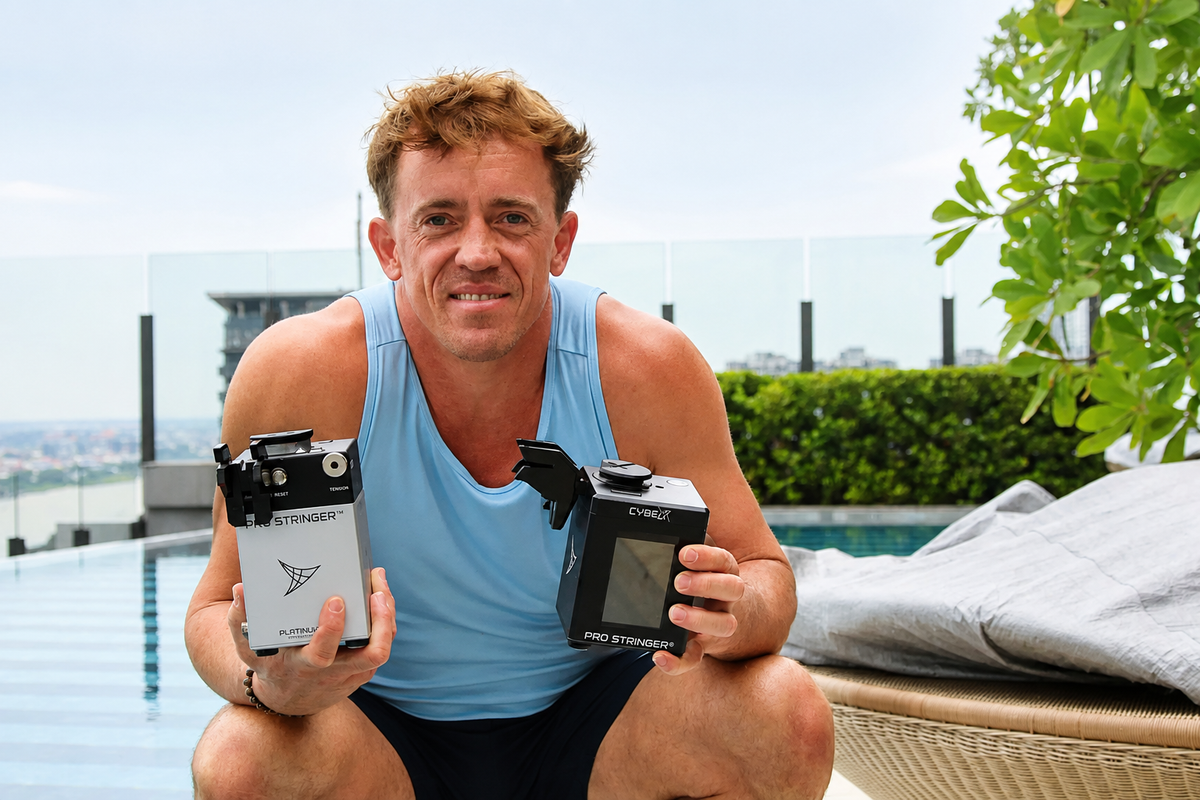
Tennis.com’s September 2016 feature follows the early development of Pro Stringer: Rubin Statham’s search for a machine he could take between tournaments instead of relying on whatever stringing was available.
Why portability mattered
The feature connects repeated stringing costs and inconsistent results with the decision to build a smaller machine. It describes the clamp-to-a-flat-surface setup and credits engineer Jemin Yao as part of the project.
Read it as an archive feature
The weights, prices and stringing times in the report refer to the 2016 machines. They are not a specification sheet or a speed promise for the current range, and a first-time owner should allow time to learn mounting, clamping, weaving and tie-offs.
Checklist for stringing away from home
- A stable, flat surface to mount the machine on.
- A power source and the right adapter for the country.
- The racquet’s stringing pattern and your notes on string and tension.
- Enough string, plus the tools for your sport.
- Airline rules for tools and batteries on your actual journey.
Pro Stringer’s current range starts with CybeX, a digital machine that strings tennis, badminton and squash racquets, and Platinum 3.0, which is sold as sport-specific models. See the travel bag if you want a dedicated case.
Original source
Read the original feature (Tennis.com, 16 September 2016). The full feature belongs to its publisher; this page summarises it and links to it.