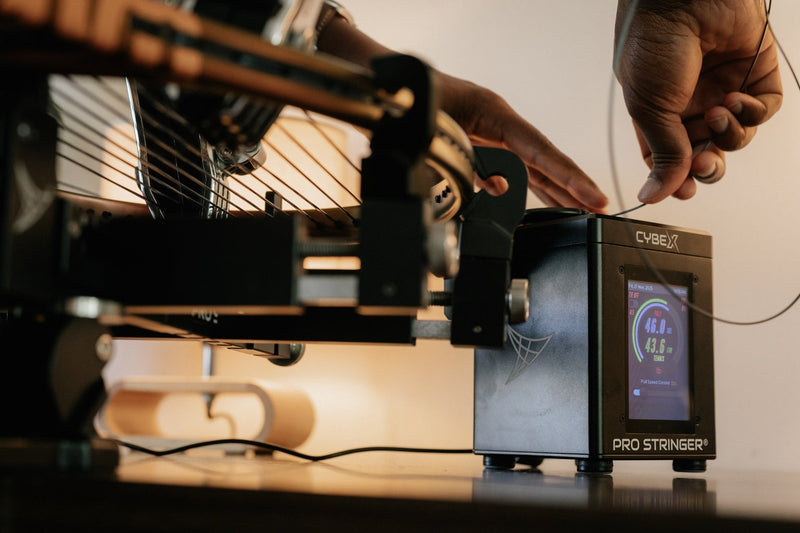
A stringing method is how the string goes into the frame: one piece or two, where the mains and crosses start, whether the string is pre-stretched, and what kind of machine pulls it. Two racquets with the same string at the same reference tension can feel different if those choices differ. Professionals settle on a method and then repeat it exactly; that habit, more than any particular setup, is what recreational players can copy.
Key points
- One-piece and two-piece stringing both work; two-piece is required for hybrids and separate main and cross tensions.
- Follow the racquet manufacturer's instructions for start and tie-off holes.
- Research shows cross strings usually end up softer than mains at the same pull tension, so the method shapes the result as much as the number you choose.
- Pre-stretching and the machine's tensioning system both change the result, so keep them the same once you find a setup you like.
- Copy the process professionals use, not their specifications.
What a stringing method covers
Once you have chosen a string and a tension, a stringer still makes several decisions that shape the finished string bed:
- One-piece or two-piece installation
- Where the mains start and which way the crosses are installed
- Whether mains and crosses get the same tension
- Whether the string is pre-stretched
- The type of tensioning system: constant pull or lockout
Each choice is small. Together they explain why a racquet can feel different after a restring even when the string and tension on the ticket are unchanged. String selection itself is covered in the tennis strings guide, and choosing a tension in the tension guide.
One-piece vs two-piece stringing
One-piece
A single length of string is used for both mains and crosses. After the mains are installed, the same string continues into the crosses. It uses fewer knots and is a natural fit when the whole racquet gets one string at one tension. Some manufacturers publish specific one-piece patterns for their frames, with the holes where the crosses start and finish.
Two-piece
The mains and crosses are installed with separate lengths of string, each tied off on its own. It needs more knots, but it allows two different strings (a hybrid) and different tensions for mains and crosses. Many manufacturers list two-piece start and tie-off holes alongside the one-piece instructions, so check what your frame specifies before choosing.
| Feature | One-piece | Two-piece |
|---|---|---|
| Lengths of string | One | Two |
| Knots | Fewer | More |
| Hybrid setups | Not possible | Possible |
| Separate main and cross tensions | Not practical | Straightforward |
| Typical use | Single string, single tension | Hybrids and split tensions |
Neither is better in itself. If you play one string at one tension and your frame's instructions allow it, one-piece is simple. If you want a hybrid or split tensions, two-piece is the way to do it.
Starting points: where the mains and crosses begin
Most tennis racquets have their mains installed from the centre outwards, alternating sides so the frame is loaded evenly. Where the first mains enter, at the head or the throat, depends on the frame's pattern and is set out in the manufacturer's instructions. Pro Stringer's machine guides include separate videos for head starts and throat starts; see the CybeX guide.
Crosses are normally installed from the head towards the throat; HEAD's guide notes that the last crosses at the throat are the hardest to weave. The first cross is often begun with a starting clamp rather than a starting knot. In HEAD's stringing guide, tour stringer Richard Parnell recommends the clamp because the string suffers less and the finished knots look consistent. He also says there is no single best way to weave the crosses, and suggests learning two methods because the right one depends on the string and the racquet.
Mains and crosses: same tension or not?
Parnell's guide notes that before starting the crosses you first decide whether to use the same tension as for the mains. Research helps explain why the question comes up. In a study published in Sports Engineering, Cross and Bower found that cross strings usually end up at a lower tension than mains even when both are pulled at the same tension, because of friction where the crosses weave through the mains and in the grommet holes.
The practical lesson is not a specific adjustment. It is that the number on the machine is a reference, and what you feel depends on the whole method; the tension guide explains how far the strung tension falls below that number. Some players pull crosses a little differently from mains; most simply keep one tension. Whichever you choose, keep it the same so you can judge results.
Hybrid stringing

A hybrid uses one string in the mains and another in the crosses. A common pattern is a firmer string such as a polyester in one direction and a softer string such as a multifilament or natural gut in the other, aiming to combine the qualities of both. Hybrids always need two-piece stringing.
A hybrid is worth trying when it solves a specific problem, for example a full bed of a firm string feeling too harsh, or a soft string breaking too quickly. If your current setup plays well, switching to a hybrid because professionals use them is unlikely to help. The strings guide describes how different materials behave.
Pre-stretching
Pre-stretching means putting the string under tension for a period before installing it. Cross and Bower's paper explains the reasoning: tension loss in a stretched string comes from bonds in the material breaking gradually, the rate is highest when stress is first applied, and once broken they generally stay broken, which is why pre-stretching reduces the subsequent rate of tension loss.
Whether to pre-stretch, and how, is a decision to make string by string. Check the string manufacturer's guidance and, if you pre-stretch, do it the same way every time. A pre-stretched job and one without will not feel identical at the same reference tension.
Constant pull vs lockout
The machine's tensioning system is part of the method too. Two broad designs exist:
- Lockout. The machine pulls to the set tension and locks. As the string continues to stretch before it is clamped, tension can drop.
- Constant pull. The machine keeps pulling while the string elongates, holding the set tension until the string is clamped.
Machine maker Stringway illustrates the difference: without constant pull, the speed of the stringer changes the result, and a stringer who works faster ends up stringing softer. Cross and Bower make a related point about any machine: consistent tension takes skill and patience, and even an interruption to the stringer's normal routine can change the result.
So the same tension on a constant-pull machine and a lockout machine may not feel the same. Neither is wrong, but switching between them, or between stringers, adds a variable. Pro Stringer machines use an electronic constant-pull tension head. For drop-weight machines, clamps and mounting, see the stringing machine comparison.
How professional setups are built
There is no standard professional setup. Players differ in string, gauge, tension, method and how often they restring, and those choices change with surface, conditions and the stage of a career. Copying a published specification also misses the parts that are rarely published, such as the machine, the method and when the racquet was strung.
What professionals tend to share is the approach. Writing in 2001, Cross and Bower observed that professionals usually restring before every match to make sure each racquet starts at the same tension. Tour stringers work to exact, repeatable routines; Parnell notes that some players will send a racquet back if the knots are not done the way they expect. Pro Stringer was founded by Rubin Statham, a former ATP player and New Zealand Davis Cup player, after years of getting different results from different stringers and machines.
What amateurs can take from it

The useful lesson from the tour is process, not equipment:
- Write down the full recipe. String, gauge, main and cross tension, one-piece or two-piece, pre-stretch or not, machine or stringer, and date.
- Change one thing at a time. Then play several sessions before judging it.
- Keep the method fixed. Same stringer or same machine, same routine, so differences come from the change you made.
- Start from the manufacturer. Use the pattern and tension range printed on or published for your frame.
- Solve a real problem. Change your setup because something is not working, not because a professional uses something else.
The practical side of each restring, from mounting to tie-offs, is in the restringing guide.
Frequently asked questions
Is two-piece stringing better than one-piece?
Not by itself. Both produce good results when done carefully. Two-piece is needed for hybrids and split tensions; one-piece is simpler when you use a single string. Follow what your frame's instructions allow.
Do I have to restring if I want to try a different method?
Yes. The method is set when the racquet is strung, so the next restring is the time to change it. Make that the only change in that job.